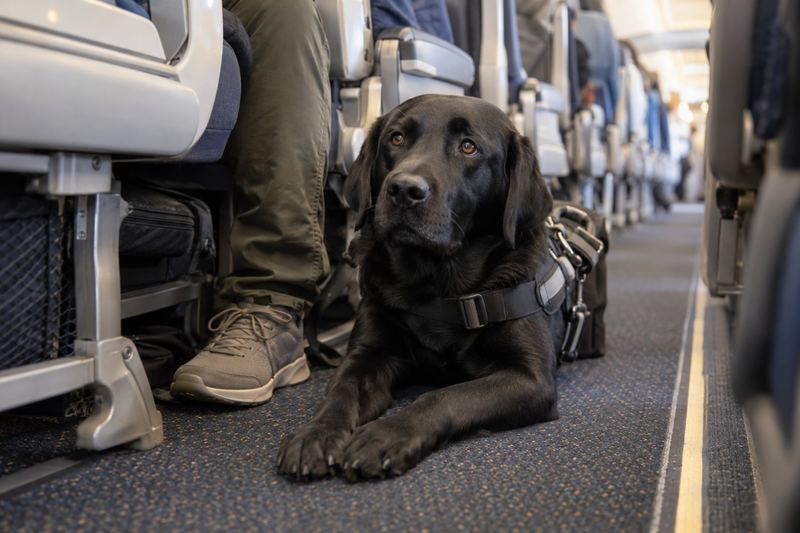
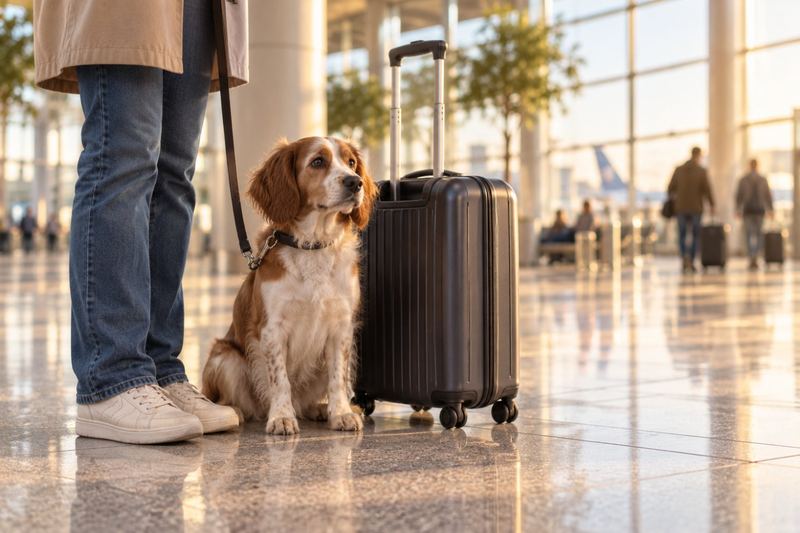
Emotional support dogs can still fly, but only as ordinary pets. Since a US Department of Transportation rule took effect on January 11, 2021, airlines don't have to accept emotional support animals. All the major US airlines now treat them as pets, so your dog needs a carrier that fits under the seat and you pay the pet fee.
Key facts
- The DOT rule effective January 11, 2021 says airlines don't have to treat emotional support animals as service animals.
- Delta, American, United, Alaska, Southwest and JetBlue all say emotional support animals fly as pets, or not at all.
- As pets, emotional support dogs pay the normal cabin fee, typically $100 to $150 each way on US airlines.
- An emotional support animal (ESA) letter from a therapist doesn't change how an airline treats the animal.
- Trained psychiatric service dogs are different. They still fly free in the cabin.
Can emotional support dogs fly?
Yes, but not as emotional support animals. They fly under the airline's pet rules, the same as any other dog:
- The dog rides in a carrier that fits under the seat in front of you, and stays in it for the whole flight.
- You pay the pet fee. The dog doesn't fly free.
- Each flight only takes a limited number of pets, so book early.
- The carrier usually takes the place of your carry-on bag or personal item.
If your dog is too big for a carrier, it can't fly in the cabin on a major US airline. See the options for larger dogs below.
Are emotional support animals service animals?
No. Under the Air Carrier Access Act, a service animal is a dog individually trained to do work or perform tasks for a person with a disability. The DOT says emotional support, comfort and companionship animals are not service animals. The ADA takes the same view and describes emotional support animals as animals that give comfort just by being with a person.
A psychiatric service dog is different, because it's trained to do a specific task, such as sensing an oncoming anxiety attack and acting to help avoid it or lessen it. Since 2021, psychiatric service dogs are treated like any other service dog. They fly in the cabin for free once you complete the DOT forms. See service dogs on planes.
What changed in 2021
Before 2021, US airlines had to let emotional support animals fly in the cabin for free with a letter from a mental health professional. The DOT's final rule, published on December 10, 2020 and effective January 11, 2021, ended that requirement. The rule:
- Limits service animals to trained dogs.
- Lets airlines treat emotional support animals as pets.
- Treats psychiatric service dogs the same as other service dogs.
- Lets airlines ask for DOT forms on health, behavior and training in place of doctors' letters.
Airlines changed their policies within weeks. Alaska Airlines stopped accepting emotional support animals on new bookings from January 11, 2021, and Southwest stopped from March 1, 2021.
What airlines allow emotional support animals?
As of October 2026, none of the major US airlines accepts them as anything other than pets. Here's what each airline says:
| Airline | Emotional support animals | Cabin pet fee |
|---|---|---|
| Delta | Not recognized as service animals; travel under pet rules | $150 one way (US, Canada, Puerto Rico, USVI) |
| American | May travel as pets; all pet requirements and fees apply | $150 per kennel, each way |
| United | Must travel as pets | $150 each way |
| Alaska | Not accepted since early 2021; dogs can fly as pets | $100 per carrier, each way |
| Southwest | Not accepted since March 1, 2021; small dogs and cats can fly as pets | $125 per carrier, one way |
| JetBlue | Not accepted as emotional support animals | $150 each way |
| WestJet | Not accepted in any cabin | C$50–59 within Canada and the US |
| British Airways | Must travel as pets (BA takes pets only in the hold) | No cabin pets |
| Lufthansa | Not accepted | Not published (depends on route) |
| Qatar Airways | Not accepted in the cabin | No cabin pets |
Fees as published by each airline, checked October 2026. We couldn't confirm Air Canada's current emotional support dog rules from its website, so check with Air Canada directly.
Do emotional support dogs fly free?
No. Because airlines treat them as pets, you pay the full pet fee. On US airlines that's usually $100 to $150 each way per carrier. Allegiant charges $50 per segment. Our cost to fly with a dog guide breaks down every fee.
Only trained service dogs fly free, and the DOT bans fees for them.
Flying with an emotional support dog: step by step
- Check the size limit. Your dog must be able to stand and turn around in a carrier that fits under the seat. Most US airlines allow a carrier around 17 to 18 inches long. Check yours with the carrier size checker.
- Book your seat, then add the pet right away. Pet spaces on each flight are limited and go first come, first served.
- Check your route. Some airlines don't allow cabin pets on certain routes, such as many international destinations.
- Get your paperwork ready. Domestic cabin pets often need no health certificate, but some destinations require one. Dogs entering or returning to the US need a CDC Dog Import Form receipt.
- Pay the fee. Some airlines charge at booking and others at the airport.
What if my emotional support dog is too big for a carrier?
Large emotional support dogs have the same limited options as any large dog:
- In the hold: Alaska and Hawaiian take dogs in a climate-controlled baggage compartment for $200 each way per kennel, up to 150 lb for dog and kennel together. Air Canada and WestJet also carry checked pets. Temperature and breed limits apply. See flying pets in cargo.
- On a dog charter: BARK Air and K9 Jets let large dogs ride in the cabin without a crate. Fares run to thousands of dollars per trip.
- Road travel may be easier for some dogs, especially snub-nosed breeds that many airlines won't carry in the hold.
Our guide to airlines that allow large dogs in the cabin covers these options in detail.
Don't present an emotional support dog as a service dog. The DOT form asks you to confirm that your dog is trained to perform a task for a disability, and certificates sold online don't make a dog a service dog.
Questions people ask
Can emotional support dogs fly in the cabin?
Yes, if they fit in a pet carrier under the seat and you pay the pet fee. Airlines don't let an emotional support dog sit at your feet or on your lap outside a carrier.
Do I need an ESA letter to fly?
No. US airlines no longer accept ESA letters for cabin travel, so a letter doesn't change the pet fee or the carrier rule.
When did airlines stop allowing emotional support animals?
The DOT rule took effect on January 11, 2021, and most US airlines changed their policies soon after. Alaska stopped accepting new bookings for them from January 11, 2021 (and carried none after February 28, 2021), and Southwest stopped from March 1, 2021.
Can an emotional support cat fly?
Yes, as a pet in an under-seat carrier on airlines that accept cats in the cabin. The fee is the same as for a dog. See our guide to flying with a cat.
Is a psychiatric service dog the same as an emotional support dog?
No. A psychiatric service dog is trained to perform specific tasks for a person with a disability and flies free under DOT rules. An emotional support dog gives comfort by being there and flies as a pet.
Sources
- US Department of Transportation: Service animals
- Federal Register: Traveling by air with service animals (final rule, December 10, 2020)
- ADA.gov: Frequently asked questions about service animals and the ADA
- Delta Air Lines: Service animals
- American Airlines: Service animals
- United Airlines: Traveling with pets
- Alaska Airlines newsroom: Alaska Airlines announces revisions to its service animal policy
- Southwest Airlines: Revised policies for emotional support and trained service animals
- JetBlue: Service dogs and animals
- WestJet: Service dogs
- British Airways: Travelling with your assistance dog
- Lufthansa: Assistance dogs
- Qatar Airways: Travelling with animals
- Alaska Airlines: Traveling with pets