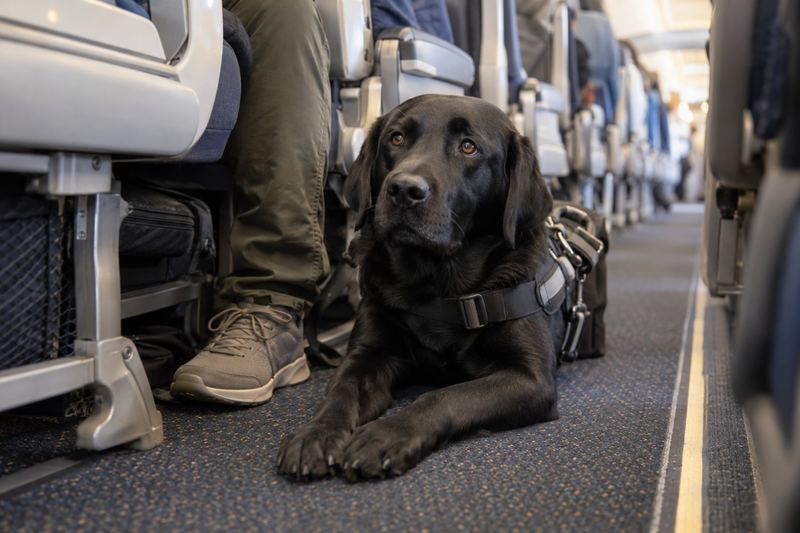
To bring a dog into the US, it must be at least 6 months old, have a microchip, look healthy and arrive with a CDC Dog Import Form receipt. That's all for dogs coming from rabies-free or low-risk countries such as Canada. Dogs that were in a high-risk rabies country in the last 6 months need extra rabies paperwork.
Key facts
- CDC's current dog import rules took effect on August 1, 2024. They apply to every dog, including US pets coming home and service dogs.
- Minimum age is 6 months at entry. Puppies under 6 months can't enter, even if they were born in the US.
- The CDC Dog Import Form is free, completed online, and needed for each dog. From low-risk countries the receipt is valid for 6 months.
- Foreign-vaccinated dogs from high-risk countries must land at one of 8 airports with a CDC-registered animal care facility and be revaccinated on arrival.
- CDC doesn't require proof of rabies vaccination for cats, but your destination state or airline may.
What do I need to bring a dog into the US?
Every dog entering or returning to the US needs the same four things, wherever it comes from:
- Age: at least 6 months old on the day it arrives.
- Microchip: one that a universal scanner can read.
- Health: the dog must appear healthy on arrival.
- CDC Dog Import Form receipt: printed or on your phone, to show the airline and US Customs and Border Protection.
What else you need depends on where your dog has been in the 6 months before it arrives, and where its rabies vaccine was given. CDC's Dog Importation Navigator, linked from its dog import page, walks you through it.
How does the CDC dog import form work?
- The person bringing the dog in (owner, importer or shipper) fills it in online. There's one form per dog and it's free.
- A receipt is emailed when you submit. You can submit on the day of travel, but CDC suggests doing it a few days ahead, and up to 6 months in advance.
- For dogs that have only been in rabies-free or low-risk countries, the receipt is valid for 6 months and can be reused for several trips. The country you depart from has to match the one on the form; if it changes, you need a new form.
- For dogs that were in a high-risk country, the receipt covers one entry on the arrival date listed.
Bringing a dog from a rabies-free or low-risk country
If your dog has only been in the US and in dog rabies-free or low-risk countries for the past 6 months, the CDC Dog Import Form is the only document CDC requires. Your dog can arrive at any airport, seaport or land border crossing. Canada and Mexico are not on CDC's high-risk list.
Any country not on CDC's high-risk list counts as low-risk or rabies-free. Check the list before every trip, because it's updated (the version we checked was dated April 15, 2026).
Bringing a dog from a high-risk rabies country
CDC's high-risk list includes countries such as Afghanistan, Brazil, India, Kenya and the Philippines. If your dog was in one of them in the past 6 months, the rules depend on where it was vaccinated. A dog that isn't vaccinated against rabies will not be allowed in.
US-vaccinated dogs returning home
- The microchip must be implanted before the rabies vaccine, or the vaccine doesn't count.
- The first rabies vaccine must be given at 12 weeks (84 days) of age or older.
- Before you leave the US, a USDA-accredited vet completes the Certification of U.S.-issued Rabies Vaccination and submits it to USDA for endorsement. It must be done at least 28 days after the vaccine. It can't be issued after your dog has left the country.
- Your dog can come back through any airport, land crossing or seaport, as long as it matches the one on your import form receipt.
- USDA export health certificates issued after July 31, 2025 are no longer accepted in place of this form.
If you don't have the certification, your dog is treated as foreign-vaccinated (below).
Foreign-vaccinated dogs
- Microchip first, then a rabies vaccine given at 12 weeks or older.
- A vet completes the Certification of Foreign Rabies Vaccination and Microchip, endorsed by an official government vet in the exporting country, no more than 30 days before travel. It can be used once.
- You must reserve a place at a CDC-registered animal care facility. Your dog has a vet exam and is revaccinated with a US-licensed rabies vaccine there. You pay for all of it.
- A passing rabies blood test from a CDC-approved lab is optional. The blood must be drawn at least 30 days after the first valid vaccine and at least 28 days before entry. Without one, your dog stays in quarantine for 28 days at the facility.
Which US airports accept dogs from high-risk countries?
Foreign-vaccinated dogs from high-risk countries must fly into the airport where their animal care facility is, and it must match the import form receipt. As of CDC's September 1, 2026 list:
| Airport | CDC-registered animal care facility |
|---|---|
| Atlanta (ATL) | Dandie Scottie Kennel |
| Dallas/Fort Worth (DFW) | DFW Pet Lounge & Quarantine |
| Los Angeles (LAX) | Kennel Club LAX; Rue's Kennels @ LAX |
| Miami (MIA) | Pet Limo |
| New York (JFK) | The ARK Pet Oasis (JFK only, not Newark or LaGuardia) |
| Philadelphia (PHL) | Gateway Animal Care Center |
| Seattle (SEA) | Dog Gone Taxi (cargo arrivals only) |
| Washington Dulles (IAD) | Pender Pet Retreat |
There are no CDC-registered facilities in Alaska, Hawaii or the US territories. Facility names are listed for reference only; they aren't recommendations.
Are there other US rules besides CDC's?
Yes. USDA APHIS has two extra requirements for some dogs:
- New World screwworm. Dogs from countries where screwworm is present need a certificate from an official government vet saying the dog was inspected within 5 days before shipment and found free of screwworm (or was treated until free). In Mexico, an authorized clinical vet listed by SENASICA can sign it.
- Foot-and-mouth disease. Dogs from affected countries must arrive with fur and bedding free of excess dirt, hay or straw. Bathe them on arrival and keep them away from livestock for 5 days.
Your destination state may also have its own rules. Hawaii is the strictest: see bringing a dog to Hawaii.
Do cats need anything to enter the US?
CDC doesn't require proof of rabies vaccination or a general health certificate for cats. It still recommends rabies vaccination for all cats. Cats arriving in Hawaii or Guam, even from the mainland, must meet local quarantine rules, and your destination state or airline may ask for a rabies certificate. Check with the state before you travel. More in how to fly with a cat.
What airlines say about dogs flying into the US
- Delta asks for the CDC Dog Import Form receipt and won't accept pets originating from Brazil, Colombia or the Dominican Republic.
- American doesn't accept dogs as carry-on pets if they originate from or have visited a high-risk country in the past 6 months.
- United asks you to call to book pets on international trips.
Many international routes don't allow cabin pets at all. See airlines that allow pets in the cabin before you book.
Questions people ask
Do I need a CDC Dog Import Form to come back from Canada?
Yes. Every dog entering the US needs one, including US dogs returning by car. The receipt stays valid for 6 months if your dog's departure country doesn't change.
Can I bring a puppy into the US?
Not if it's under 6 months old. CDC's minimum age applies to all dogs at entry, with no exceptions listed.
Does my dog need a health certificate to enter the US?
CDC doesn't require one. Dogs from screwworm-affected countries need a screwworm inspection certificate, and your airline or destination may ask for a health certificate.
Does the CDC Dog Import Form cost anything?
No. The form is free and completed online for each dog.
Do service dogs need a CDC Dog Import Form?
Yes. CDC says the receipt is required for all dogs entering the US, including service dogs.
Sources
- CDC: Bringing a dog into the United States
- CDC: Entry requirements for dogs from dog rabies-free or low-risk countries
- CDC: Entry requirements for U.S.-vaccinated dogs from high-risk countries
- CDC: Entry requirements for foreign-vaccinated dogs from high-risk countries
- CDC: CDC-registered animal care facilities
- CDC: High-risk countries for dog rabies
- CDC: Frequently asked questions on dog importations
- CDC: Bringing a cat into the United States
- USDA APHIS: Bringing a dog into the United States
- Delta Air Lines: Pet travel overview
- American Airlines: Traveling with pets